
Which Midvale Public Records Are Open
Midvale is a city within Salt Lake County, not a separate county records jurisdiction. That fact determines where a request belongs. The scope of Midvale public records spans city council, permit, code, police, justice-court, and administrative files. Salt Lake County keeps deeds, assessment rolls, historical tax material, marriage licensing, and county election files. Utah agencies operate statewide court, vital, license, corporation, corrections, and archival systems.
| Midvale record set | Responsible custodian | Web access | Practical access level |
|---|---|---|---|
| Deeds, liens, and plats | Salt Lake County Recorder | Free property document list; paid Data Services | Public instruments, with copy and image fees |
| Assessment and parcel data | Salt Lake County Assessor | Free owner, address, parcel, and GIS tools | Open roll; sale prices are not public |
| City administration and permits | Midvale City Recorder or creating department | Selected city pages and online services | GRAMA request when no index exists |
| Justice and district cases | Midvale Justice Court or Utah Courts | XChange paid online; free public terminals | Public case data only; protected cases excluded |
| Birth and death certificates | County Health or Utah Vital Records | Applications, not an open recent-name index | Eligibility and identification required while controlled |
| Professional and business filings | Utah DOPL or Division of Corporations | Free official lookup tools | Public filing fields, with sensitive data withheld |
| Custody and registry data | Sheriff, Utah Corrections, or registry office | Agency-specific lookups | Scope and legal-use limits vary |
Open status does not mean every field or image is visible online. Utah law excludes or limits sealed, expunged, juvenile, adoption, driver, and protected personal data. Recent vital certificates follow their own controlled-record rules. A portal can also show an index while the official image or certified copy still requires payment, identity proof, or a direct request.
Note: A postal address labeled Midvale does not by itself prove that Midvale City created the record; confirm municipal jurisdiction before filing.
Utah GRAMA Rules for Midvale Records
The Government Records Access and Management Act, Utah Code Title 63G, Chapter 2, sets the baseline for state and local executive records. Any person may ask for a record. Utah residency is not required. Section 63G-2-201 starts with public inspection, while Sections 302, 304, and 305 identify private, controlled, and protected material. The custodian must apply those classes to the requested record rather than treat every file as open or closed as a whole.
GRAMA is not the right process for every record. Court files follow judiciary access rules. Recent certificates use vital-record applications. Midvale police files go through Unified Police, and fire files go through Unified Fire. The city recorder cannot supply a file held by one of those separate custodians. A request sent to the wrong office may be redirected, but starting with the creator saves time.
- Custodian
- The office responsible for keeping and responding for a specific record series.
- Index
- A searchable list of entries. It may summarize a record without displaying the underlying image.
- Certified copy
- A copy authenticated by the keeper for an official purpose, usually for an added fee.
- Exemption
- A legal basis for withholding all or part of a record that would otherwise be requestable.
Midvale Public Records Offices and Portals
The word recorder can be misleading here. Midvale's City Recorder handles locally created government files, while the Salt Lake County Recorder records land instruments. The Assessor runs the county's free ownership roll and parcel tools. Midvale Justice Court holds its local case files even though public summaries can flow into Utah's statewide court system.
Midvale City Recorder
7505 S Holden Street
Midvale, UT 84047
randreason@midvaleut.gov
Salt Lake County Recorder
2001 S State St., Suite N1-600
Salt Lake City, UT
385-468-8145
Midvale Justice Court
Local traffic, small claims, ordinance, and limited criminal matters
801-567-7265
Counters and direct contacts remain important. The County Recorder publishes weekday hours from 8 a.m. to 5 p.m. Its staff can provide copies and access products but does not conduct a title search for a patron. Midvale Justice Court lists separate lobby and phone hours. Call before relying on a public terminal at a justice court because terminal availability is not uniform.
Searching Midvale Recorder Records
Salt Lake County Recorder Data Services has more than one access tier. The free route accepts a property address or parcel number and returns a quick list of documents attached to that property. Richer owner-of-record, legal-description, tract, chain-of-title, detail, and image products consume paid data units. The research did not establish an earliest web coverage year, so an old instrument should not be assumed absent merely because the online list fails.
| Recorder search mode | Input type | Required status | Use and limit |
|---|---|---|---|
| Property Address | Autocomplete text | One of address or parcel | Select a suggested physical address |
| Parcel Number | Formatted identifier | One of address or parcel | Preserve the county parcel format and leading zeroes |
| Owner of record | Paid search mode | Optional | Current ownership and history product |
| Recorded documents | Free or paid mode | Optional | Free list; details and images can use data units |
| Tract or title chain | Paid search mode | Optional | Research path for linked land instruments |
| Legal description | Paid search mode | Optional | Identifies land beyond its street label |
Temporary access costs $5 for 150 data units and ends when the units are used or after 24 hours. Ordinary recorded copies cost $2 per page; historical or vault pages cost $5. Certification adds $5 to the $2-per-page rate. The Recorder document-request form asks for requester details and document identifiers, then lets the requester add book, page, line, names, date, and type when the exact reference is uncertain. Standard customers receive a ready notice and pick up and pay; email delivery is reserved for EFT-account users.
Note: Images recorded before the office's afternoon cutoff are typically posted the next working day, so a recent filing may need a brief recheck.
Reading Midvale Property Records Carefully
The Salt Lake County Assessor offers the strongest free name-first land search. Its current form accepts Owner, Address, or Parcel Number. The detailed legacy form asks for at least the first three owner-name letters and formats a person as last name, then first name. Results may show the parcel ID, owner, tax-mailing address, situs address, legal description, property type, tax district, acreage, assessed values, and building characteristics.
Three labels should stay separate. The situs address locates the land. The tax-mailing address is where the owner chose to receive notices. The legal description identifies the land in recorded instruments. A mailing address that differs from the situs may aid research, but it does not prove where anyone lives. Utah is also a non-disclosure state. An assessed or market value is not a public sale price and should never be described as the amount paid.
The free Parcel Viewer adds map geometry, parcel queries, aerial and oblique imagery, tax-district layers, a printable PDF map, and selection exports. It helps confirm which parcel is at issue. The deed remains the source for legal ownership facts. Older taxes and appraisal details move to Salt Lake County Archives, where tax payments reach back to 1853 and appraisal cards begin in 1936.
Accessing Midvale Court Records
Midvale Justice Court handles class B and C misdemeanors, infractions, local ordinance matters, traffic, and small claims. Third District Court handles general civil, domestic, probate, felony, and class A misdemeanor cases. Utah Courts XChange supplies public statewide CORIS summaries, but the web service charges for searches and documents.
Guest access begins with a $10 credit, then costs 35 cents per search and $1 per public document. Every search click is billable, and results cap at 500. The CORIS public-terminal instructions identify free XChange access at most district courthouses and the Utah State Law Library. That route is easy to miss. A researcher may also contact the Midvale clerk for the actual local file or use the judiciary's court-record request channels. MyCourtCase is only for a party or authorized user.
A docket is the dated list of filings and events in a case. XChange results can include court, case type and number, filing date, parties, birth date where available, and party role. Extended history can add attorneys, the judge, hearings, judgments, charges, pleas, and outcomes. Sealed, expunged, juvenile, and other protected cases will not appear. Historical judicial material more than about 50 years old may instead be at Utah State Archives.
Terminal tip. Paid web access is convenient, but a district courthouse or State Law Library terminal can provide free XChange searching. Call the location first.
Midvale Vital Records Access Limits
Utah vital certificates are controlled records under Utah Code Section 26B-8-125. Birth certificates open after 100 years, death certificates after 50 years, and marriage or divorce records after 75 years under the state's vital-record scheme. Until then, the subject, qualifying immediate family, guardian, or designated legal representative must provide the application, identification, fee, and any needed proof of relationship or authority.
The Utah certificate order choices separate online and mail applications from local in-person service.
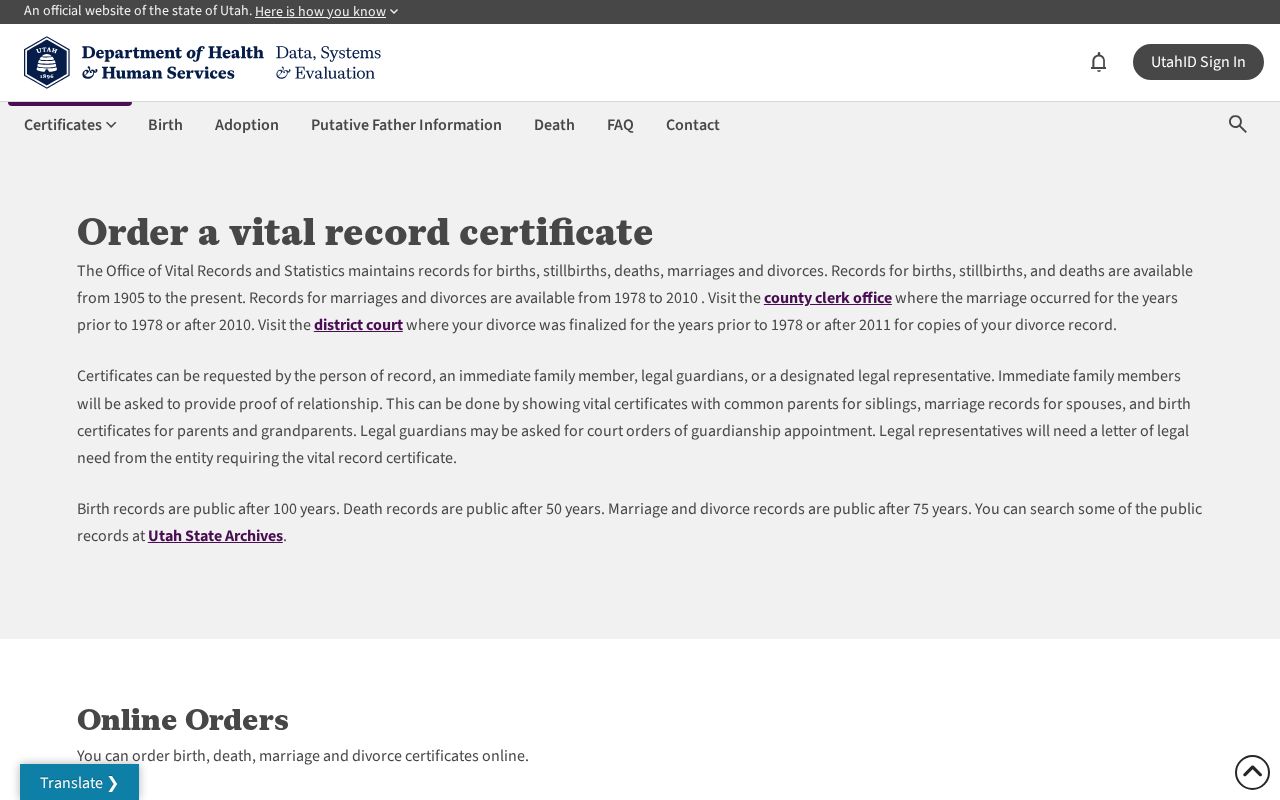
The screen helps a Midvale requester choose the right delivery channel, but it is not a searchable index of recent births or deaths. Salt Lake County Health provides the local counter. State OVRS handles births, stillbirths, and deaths from 1905 forward, plus marriage and divorce abstracts for 1978 through 2010. County Clerk records cover other marriage ranges, while Third District Court supplies divorce decrees and case files.
Midvale Archives Birth Records Search
For open family-history material, the Utah State Archives Salt Lake County birth-register index provides a name search for 1898 through 1905.
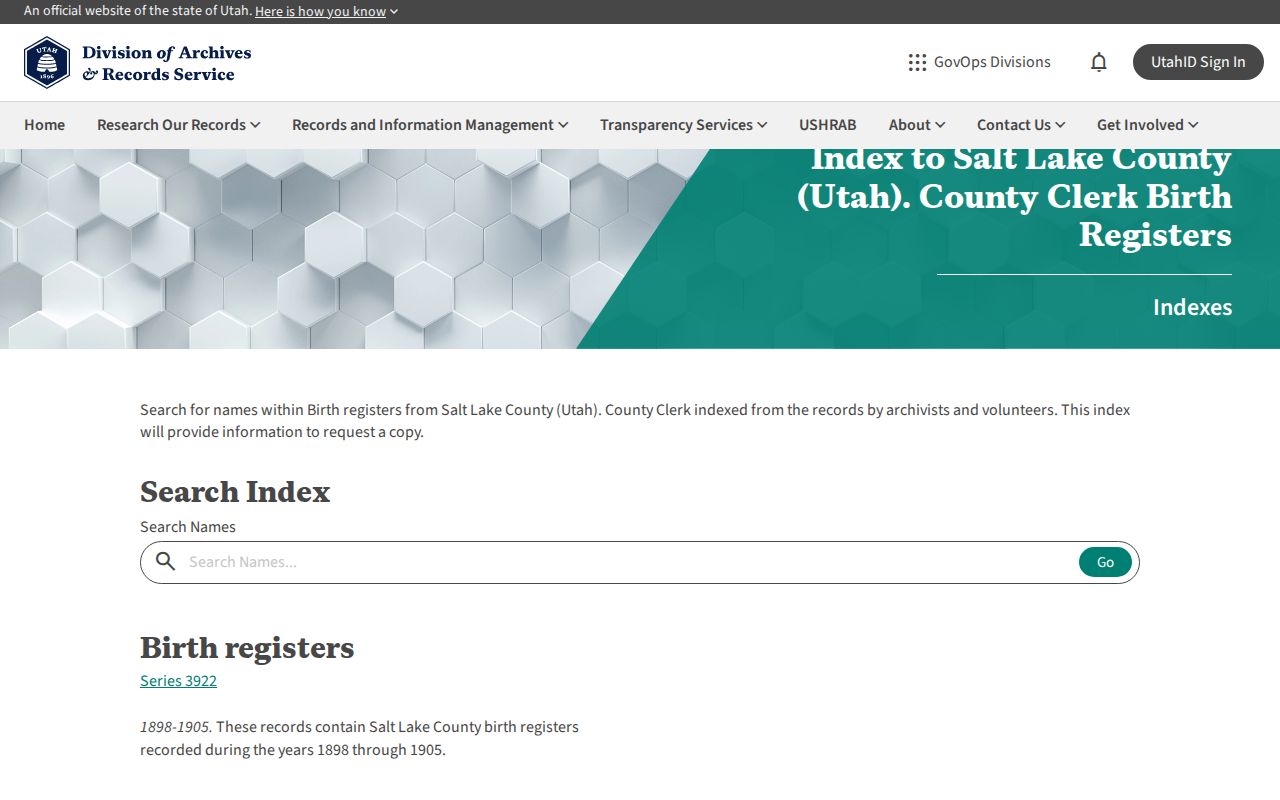
The search bridges the years just before statewide registration began. It can point to an open historical entry, while later closed certificates still require the statutory application route. An index result is not the same thing as a certified certificate.
Routing Midvale City Records Requests
Use the Midvale City Recorder for council agendas and minutes, ordinances, notices, city election and disclosure material, executed city documents, and other city-created administrative files. A useful request names the record series, a narrow date range, the person or address involved, and the desired electronic format. Building and Safety files may contain owner, applicant, or contractor names, but the public search may be address-led. If no reliable name index exists, request a defined address and date span.
The creating department matters. Code Compliance records may protect complainant or investigative data. City business-license pages offer application and renewal tools but no verified public master name index. A requester can seek an existing active-license list through GRAMA without asking the city to create a new analysis. Police reports route to Unified Police, and fire records route to Unified Fire. Those splits should be stated in the request rather than hidden under a broad demand to City Hall.
Note: State corporation registration, a state occupational license, and a Midvale city business license are separate records with different custodians.
Midvale Records Deadlines and Fees
Under Section 63G-2-204, an ordinary GRAMA response is due in ten business days. A qualifying expedited request has a five-business-day track. A written extension may apply when extraordinary circumstances exist. Section 63G-2-203 allows reasonable actual costs, including custom compilation and time charged at the lowest-paid qualified employee's rate. The first 15 minutes are free under the statewide rule, and classification review itself is not billed.
Salt Lake County's published working policy is more generous for basic staff time: the first 30 minutes are free, then the stated rate is $25 per hour. Paper copies may cost up to 50 cents per page, certification is $10 or the amount set by law, and actual media cost may be charged. The county may ask for advance payment when an estimate exceeds $50. A requester may seek a waiver by explaining the public benefit.
The Salt Lake County GRAMA request portal presents its electronic request route along with response and fee guidance.
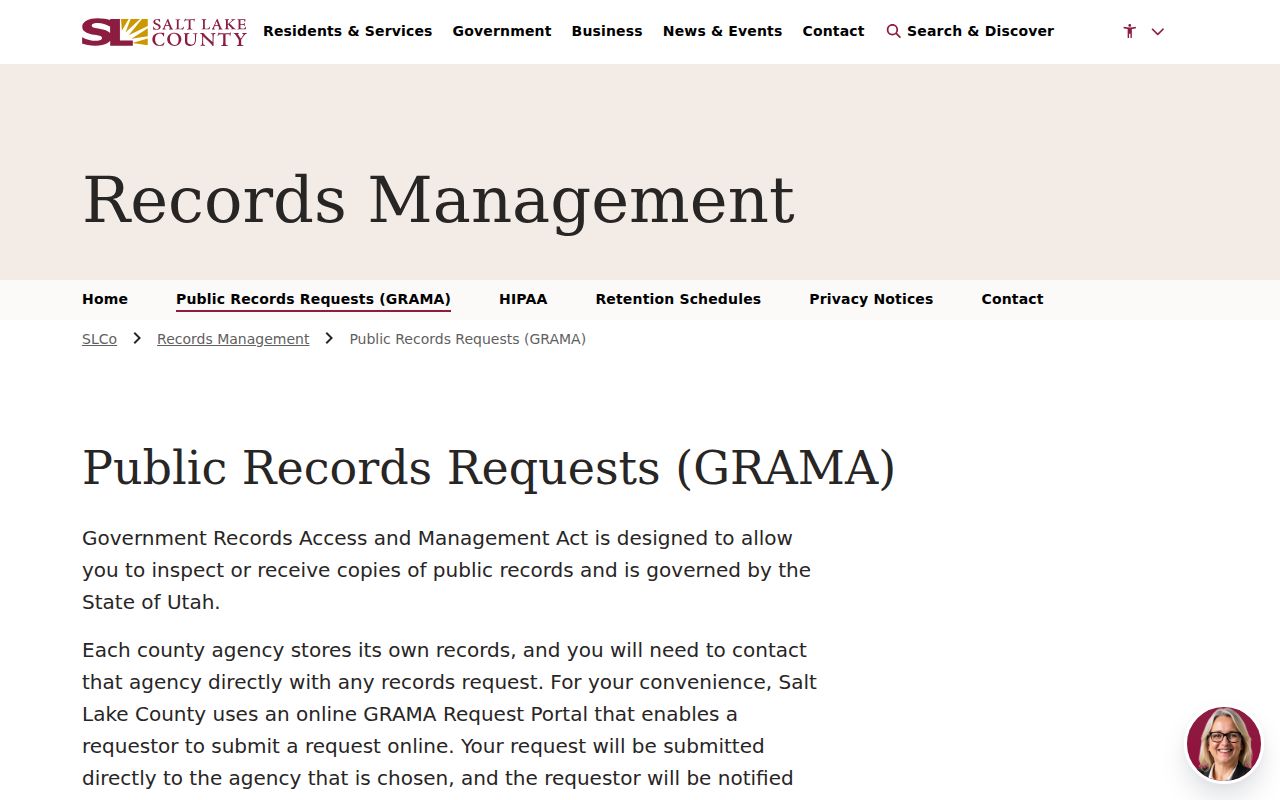
The portal is the county route, not a single intake for every Midvale record. City, court, vital, police, and fire files still go to their own custodians. Ask to inspect before buying copies when the page count is unknown, set a cost-notification ceiling, and request the existing native electronic format when practical.
Why Midvale Records Are Not All Online
The idea that every open record appears in a web search does not fit Salt Lake County. Older deed abstracts, tax ledgers, appraisal cards, court files, and vital indexes can sit in reading rooms, microfilm, catalogs, or transferred archival series. The County Archives research notes document tax evidence from 1853 through the prior year and appraisal cards from 1936. Its reference contact channel supports phone and email copy requests and limited paid research after the first free 15 minutes.
Utah State Archives is the fallback for transferred historical court, probate, naturalization, election, and government series. Updated finding aids can reveal a box or series even when images are not online. Salt Lake County is also digitizing more than a century of fragile property records through an active Recorder-led project. Digitization improves discovery, but it does not erase the need to check the creating office, the county archives, and the state archives in sequence.
A library adds another channel. The Ruth Vine Tyler Library in Midvale provides access to newspapers, catalog materials, and licensed genealogy databases. Specialized originals usually remain with County Archives, State Archives, or another named custodian. Search both “Midvale” and the earlier Bingham Junction place name when working with older residents.
Midvale Property Records Watch Alerts
Salt Lake County's free Property Watch service emails or texts when a new document is attached to a registered parcel. Alerts can show parcel number, Recorder entry number, document type, and recording date. The county's 2019 service became a model for a 2024 Utah law requiring every county recorder to provide a similar notice system. It offers a useful early warning without charging a signup fee.
The official Property Watch signup begins with an address-based search.
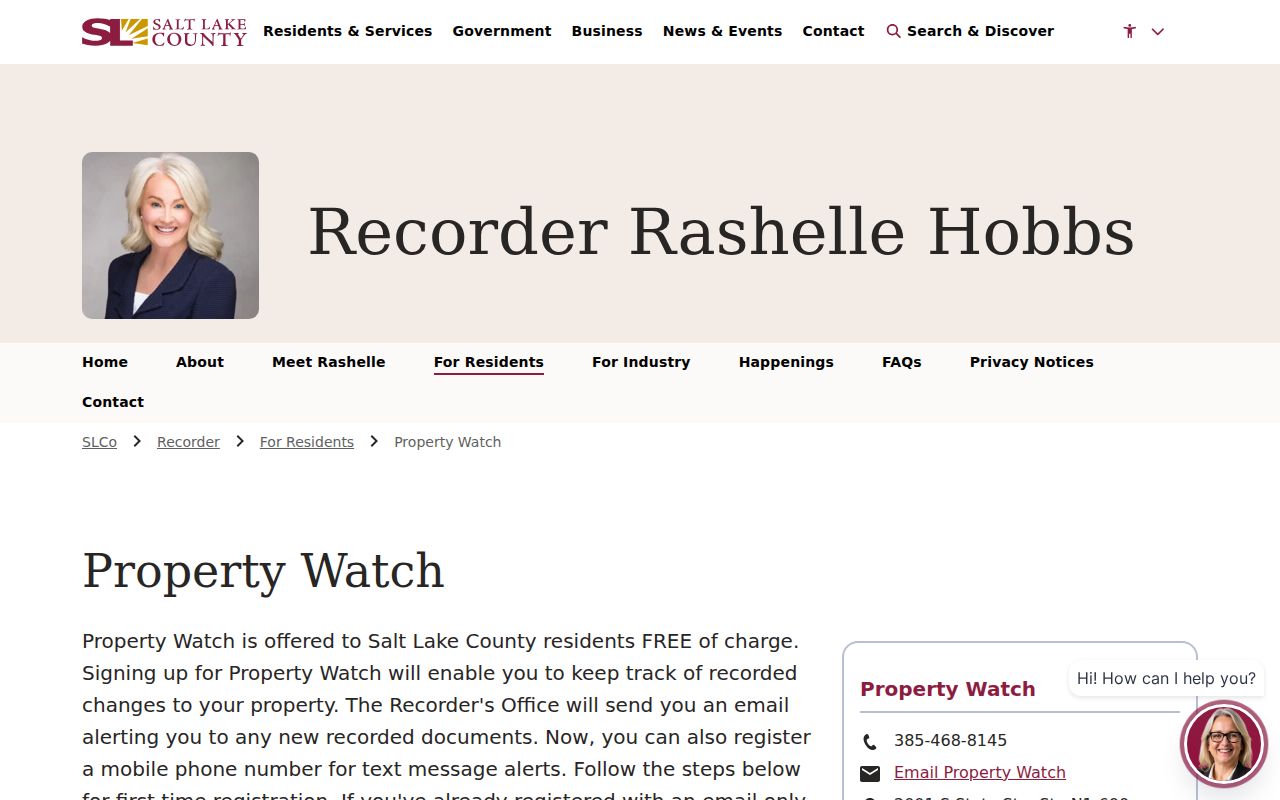
The alert is a prompt to review a new filing, not a title opinion. It may miss a document that was not attached to a parcel, and it cannot decide whether title is clear. Duplex ranges may appear as a range, while autocomplete shows only its first ten suggestions. Continue typing until the standardized address appears.
Requesting Midvale Public Records
A narrow request works better than a demand for every file about a topic. Use the office's own series name and include exact spelling variants, dates, addresses, parcel or case numbers, and document titles when known. State whether inspection is enough or a copy is needed. Ask for electronic delivery, set the highest cost that can be incurred without another notice, and request a citation for any field withheld by classification.
- Identify the keeper. Separate Midvale city files from county land or election records, court files, vital certificates, police reports, and fire records.
- Check the access channel. Use the official index, counter, terminal, archive catalog, or special application before turning to GRAMA.
- Describe the existing record. Give the series, subject, date span, names, address, parcel, case number, and requested format that apply.
- Control cost. Ask to inspect first, request an estimate, and set a written cost-notification ceiling before copies or staff research begin.
- Review the response. Distinguish no responsive record, wrong custodian, clarification, redacted production, and denial. Narrow an overbroad request when useful.
- Use the appeal path. A denial should identify its classification and route. GRAMA appeals begin with the entity's chief administrative officer and may continue through the state process and district court.
Lawful use. Open access supports personal research, family history, consumer safety, and civic transparency. It never authorizes stalking, harassment, threats, impersonation, or misuse of protected data.